Blue Signal Protection
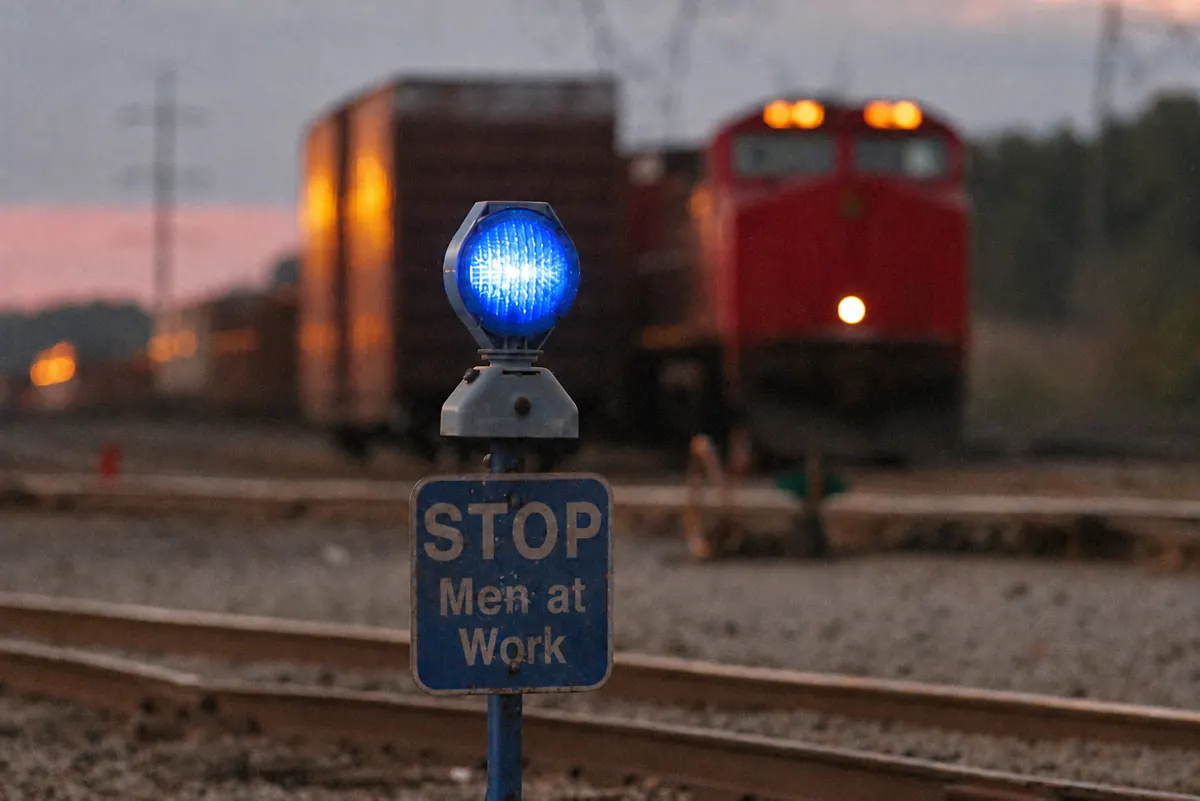
Plain language explanation
A blue signal means people are working on, under, or between equipment. When a blue signal is up, that equipment cannot be moved, coupled to, or have other cars shoved onto the same track. The worker who puts the blue signal up is the only person allowed to take it down.
Why it matters
Blue signal protection exists because workers inspecting or repairing equipment are often out of sight of anyone operating the train. A single unexpected movement can be fatal. The rule puts control in the hands of the person most at risk.
Real-world scenario
A car inspector goes under a cut of cars to check brake rigging and sets a blue flag at each end of the track. While they are under there, a switch crew gets cleared to add two more cars to that same track. Because the blue signals are displayed and the switch is lined and locked against movement, the cars cannot be shoved in, and the inspector finishes the job safely.
Supervisor takeaways
- 1Make sure every worker sets and removes their own blue signal.
- 2Confirm switches are lined and locked before anyone goes between equipment.
- 3Treat a blue signal as an absolute stop — no exceptions.